
Why Clogged Street Drains Often Lead to Driveway and Garage Flooding in Smallwood
Heavy Charlotte thunderstorms can overwhelm street drainage systems when catch basins clog with leaves, debris, and sediment. In Smallwood, this creates a direct path for stormwater to back up onto driveways and flow into garages. The Piedmont clay soil surrounding Charlotte retains water like a sponge, meaning runoff has nowhere to go once street drains fail. This combination of urban infrastructure limitations and local geology makes Smallwood homes particularly vulnerable to flash flooding from clogged municipal drains. Charlotte Stormwater Services.
Smallwood sits in a low-lying area near Briar Creek where surface water naturally collects. When Charlotte Stormwater Services catch basins become blocked, the water table rises quickly during heavy rain events. Water then follows the path of least resistance – often through driveway cracks, garage door seals, or foundation gaps. The result is Category 3 black water intrusion that carries bacteria, chemicals, and debris from the street directly into your home. Specialized Water Damage Restoration for Historic Homes in Dilworth.
Understanding this connection between clogged street drains and property flooding helps homeowners take immediate action and implement long-term protection. Professional water damage restoration services address both the immediate cleanup and the underlying drainage issues specific to Charlotte’s red clay environment. Rapid Water Extraction and Drying for Properties Near Lake Norman.
How Charlotte’s Stormwater System Works and Why It Fails
Charlotte’s stormwater infrastructure relies on a network of catch basins, underground pipes, and retention ponds to manage surface runoff. The system is designed to handle typical rainfall but struggles during extreme weather events common to the Piedmont region. Smallwood’s proximity to Briar Creek means it experiences additional drainage challenges from both street runoff and creek overflow.
Catch basins act as the first line of defense by collecting debris before it enters the underground pipe network. When these basins clog, water backs up onto streets and properties. The Mecklenburg County Flood Insurance Rate Maps show Smallwood in a moderate flood risk zone due to its location near water bodies and low elevation relative to surrounding areas.
During a typical Charlotte summer thunderstorm, the system can handle 1-2 inches of rain per hour. However, when debris blocks catch basins, even moderate rainfall of 0.5 inches can cause street flooding. The red clay soil in Smallwood absorbs water slowly, creating surface pooling that compounds drainage problems. This combination of factors means Smallwood homeowners must be proactive about both municipal and private drainage solutions.
Immediate Steps When Street Water Enters Your Property
When you notice water backing up from the street toward your driveway, time becomes critical. The first 30 minutes determine whether you’ll face minor cleanup or major structural damage. Category 3 water from street flooding contains contaminants that pose health risks and require professional sanitization. Sump Pump Failure Cleanup and Repair in the Elizabeth Neighborhood.
Begin by documenting the flooding with photos and videos before touching anything. This documentation proves invaluable for insurance claims and helps restoration professionals assess the damage remotely. Move vehicles and valuable items from the garage to higher ground immediately. Do not attempt to vacuum or mop up the water – this can spread contamination and create electrical hazards. What to Do Immediately if Your Ballantyne Basement Floods Tonight.
Call (980) 342-9955 immediately for emergency water extraction. Professional restoration teams arrive with industrial pumps, moisture meters, and antimicrobial treatments specifically designed for black water contamination. They can typically begin extraction within 60-90 minutes of your call, preventing secondary damage like mold growth that begins within 24-48 hours in Charlotte’s humid climate.
Keep children and pets away from flooded areas. Street water carries bacteria from animal waste, automotive fluids, and other hazardous materials. Even after visible water recedes, surfaces remain contaminated and require professional cleaning according to IICRC S500 standards for Category 3 water damage. Steps to Take After a Flood.
Who is Responsible? City vs. Property Owner Drainage Issues
Understanding the division of responsibility between Charlotte Stormwater Services and property owners is crucial for Smallwood residents. The city maintains public catch basins, storm drains, and underground piping within street right-of-ways. Property owners are responsible for private drainage systems, including driveway grading, French drains, and gutter connections to the municipal system.
If a clogged catch basin causes flooding, Charlotte residents should report it to 311 Charlotte immediately. The city aims to inspect and clear reported blockages within 24-48 hours, though response times extend during major storm events. However, if your property’s grading directs water toward the house rather than away from it, that’s a private maintenance issue requiring homeowner action.
Many Smallwood flooding problems occur at the intersection of public and private responsibility. For example, if your driveway slopes toward the garage and the street drain is clogged, you face flooding from both sources. Professional drainage assessments can identify these compound issues and recommend solutions that address both municipal and property-level vulnerabilities.
The North Carolina Department of Environmental Quality requires property owners to maintain drainage systems that don’t negatively impact neighboring properties. This means your French drain or sump pump discharge must flow properly without creating new problems for others. Professional installation ensures compliance with these regulations while protecting your home. EPA Urban Runoff Management.
Long-Term Drainage Solutions for Smallwood Properties
Preventing future flooding requires addressing both immediate vulnerabilities and underlying drainage issues specific to Smallwood’s geography. Professional drainage solutions consider Charlotte’s red clay soil, which expands when wet and creates hydrostatic pressure against foundations. This pressure forces water through even tiny cracks when the water table rises.
French drains installed around your property perimeter collect subsurface water before it reaches your foundation. These systems consist of perforated pipes surrounded by gravel and filter fabric, creating a path for water to flow away from your home. In Smallwood’s clay soil, French drains require deeper installation and larger aggregate than in sandy soils.
Sump pump installation provides another layer of protection, especially for homes with crawlspaces or basements. Modern sump pumps include battery backup systems that operate during power outages common during Charlotte thunderstorms. The pump activates when water reaches a predetermined level, discharging it away from your foundation through a dedicated line.
Driveway grading improvements can dramatically reduce flooding risk. Professional grading creates a slope of at least 1/4 inch per foot away from your home, directing water toward street drains or designated drainage areas. This simple modification often prevents the majority of driveway flooding during moderate rain events.
Professional Water Damage Restoration Process for Street Flooding
Professional restoration for street flooding follows specific protocols established by the IICRC S500 standard. The process begins with safety assessment and containment to prevent cross-contamination between affected and unaffected areas. Technicians wear personal protective equipment including respirators, gloves, and Tyvek suits when handling Category 3 water.
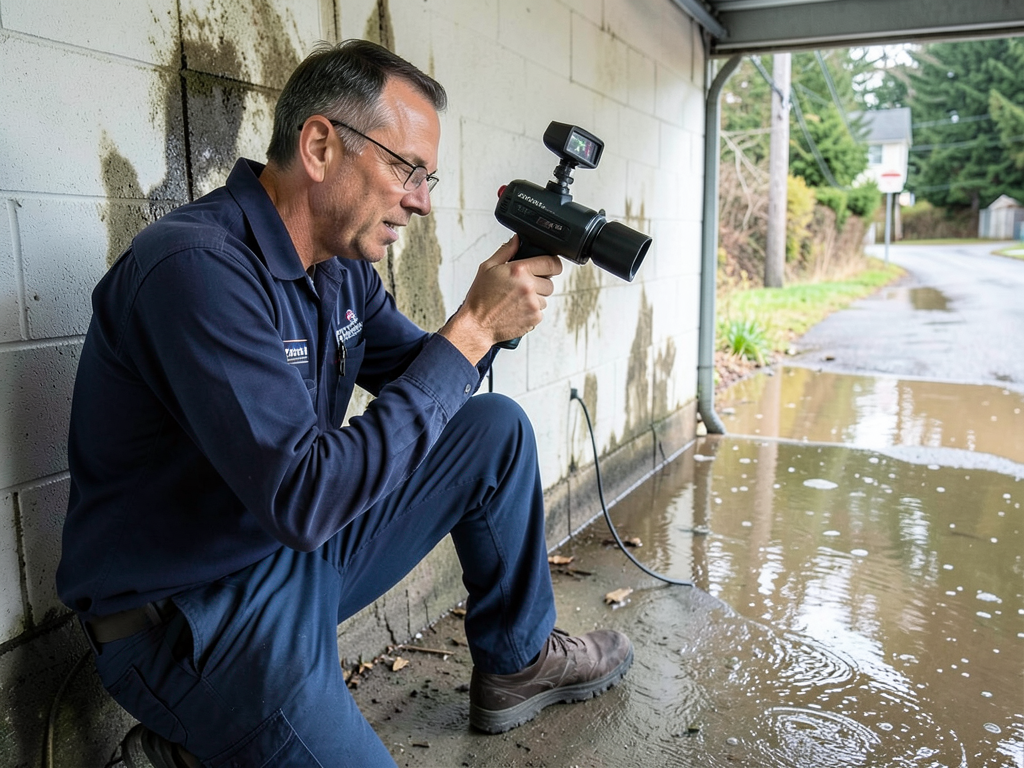
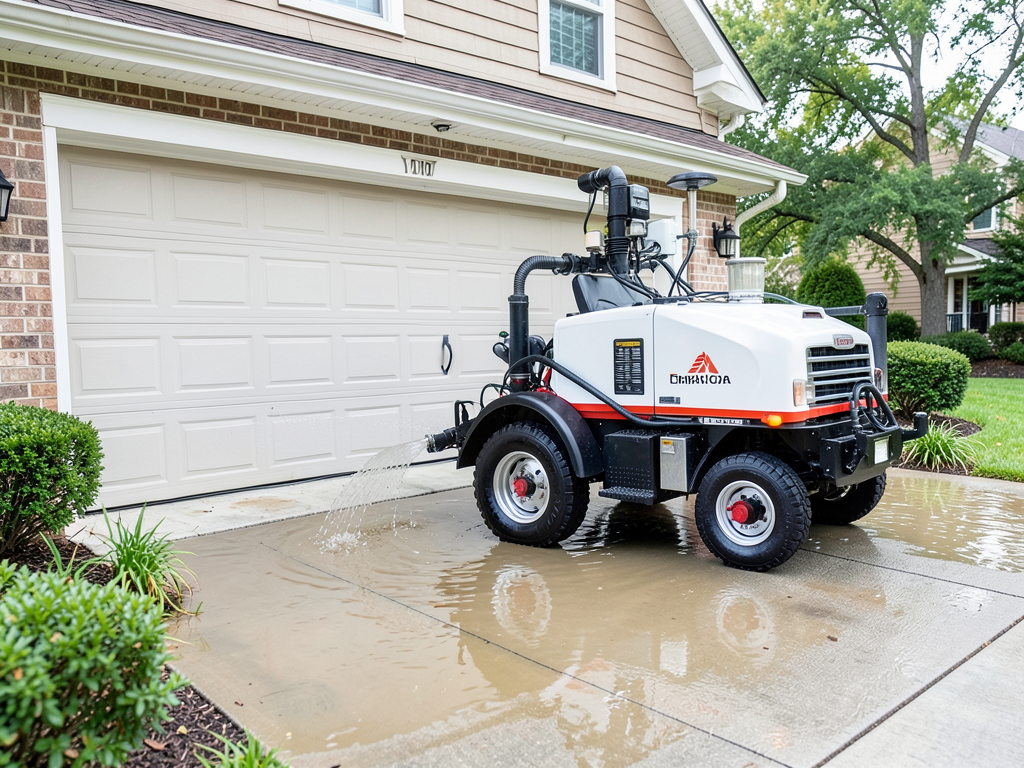
Water extraction uses truck-mounted or portable extraction units capable of removing thousands of gallons per hour. These industrial vacuums remove visible water quickly, but the critical work involves moisture detection and structural drying. Technicians use thermal imaging cameras and penetrating moisture meters to identify water trapped in walls, under flooring, and in insulation.
Structural drying employs commercial air movers and dehumidifiers positioned according to psychometric calculations. The goal is reducing moisture content in materials to safe levels within 72 hours, preventing mold growth and structural damage. In Charlotte’s humidity, this process often requires 4-7 days of continuous drying with daily monitoring and adjustment.
Antimicrobial treatment follows drying to eliminate bacteria and prevent mold growth. Professional products used by certified technicians are more effective than consumer-grade cleaners and safe for use in occupied homes once dry. The final step involves reconstruction of damaged materials, which may include drywall replacement, flooring repair, and painting.
Understanding Smallwood’s Unique Flooding Vulnerabilities
Smallwood’s flooding vulnerabilities stem from its specific location within Charlotte’s watershed. The neighborhood sits in a bowl-shaped depression where water naturally collects from surrounding higher elevations. This topography, combined with aging infrastructure in some areas, creates conditions where even moderate rainfall can cause significant flooding.
The soil composition in Smallwood consists primarily of Charlotte red clay with pockets of sandy loam. Red clay’s low permeability means water remains on the surface longer than in areas with better-draining soils. When combined with impervious surfaces like driveways and streets, this creates ideal conditions for surface flooding during heavy rain.
Many homes in Smallwood were built during Charlotte’s rapid growth period of the 1970s-1990s when drainage standards were less stringent than today. These older properties often lack modern drainage features like properly sized gutters, downspout extensions, and foundation drainage systems. Professional assessment can identify these deficiencies and recommend cost-effective upgrades.
The Briar Creek watershed influences Smallwood’s drainage patterns. During major storm events, the creek can back up into the stormwater system, overwhelming catch basins and creating street flooding even when individual drains function properly. This watershed connection means Smallwood residents must prepare for both localized and regional flooding events.
Cost Factors and Insurance Considerations
Water damage restoration costs vary significantly based on the extent of flooding and contamination level. Category 3 street flooding typically costs 30-50% more than clean water damage due to the additional sanitization and safety requirements. The average Smallwood home facing garage flooding might see restoration costs ranging from $3,000 to $15,000 depending on the affected area.
Insurance coverage for street flooding varies by policy type. Standard homeowners insurance typically covers sudden and accidental water damage but may exclude flooding from external sources. Separate flood insurance through the National Flood Insurance Program covers street flooding and other external water sources. Review your policy details or consult with your insurance agent about specific coverage limitations. National Flood Insurance Program.
Professional restoration companies often assist with insurance documentation and claims filing. They provide detailed damage assessments, moisture mapping, and repair estimates that insurance adjusters require for claim approval. This service can significantly reduce the stress of navigating insurance processes during an already difficult time.
Preventative measures like French drains and sump pump installation represent investments that can prevent much more expensive restoration costs. Many Smallwood homeowners find that spending $2,000-$5,000 on drainage improvements saves $10,000-$30,000 in potential flood damage over a 10-year period.
Emergency Response and What to Expect
When you call (980) 342-9955 for emergency water damage restoration, expect a rapid response tailored to Smallwood’s specific needs. Our teams understand the local geography, common flooding patterns, and building construction typical to the area. This local knowledge allows for faster assessment and more effective solutions.
Emergency response vehicles arrive fully equipped with extraction units, drying equipment, and safety gear. Technicians conduct immediate safety assessment, including checking for electrical hazards and structural stability. They then begin water extraction while documenting damage for insurance purposes.
The initial assessment typically takes 30-60 minutes, during which technicians determine the category of water damage, extent of affected areas, and required equipment. You’ll receive a verbal briefing on findings and recommended next steps, followed by a detailed written estimate before any work begins.
Throughout the restoration process, you’ll have direct communication with both field technicians and office staff. We understand that flooding creates significant stress, and our goal is to keep you informed while efficiently restoring your property to pre-loss condition. Most Smallwood water damage projects are completed within 5-10 days, depending on the extent of damage.
Preventative Maintenance and Community Action
Preventing street drain-related flooding requires both individual homeowner action and community coordination. Smallwood residents can form neighborhood associations focused on drainage maintenance, reporting clogged catch basins to Charlotte 311, and sharing information about effective flood prevention strategies.
Individual preventative measures include keeping gutters clean, ensuring downspouts extend at least 6 feet from your foundation, and maintaining proper grading around your home. Annual inspections of your drainage systems can identify potential problems before they cause flooding. Consider installing water alarms in your garage and crawlspace to provide early warning of water intrusion.
Community-level actions prove even more effective. Organized groups can petition Charlotte Stormwater Services for infrastructure improvements, coordinate bulk purchases of drainage solutions, and share the costs of professional assessments. Some Smallwood neighborhoods have successfully lobbied for catch basin upgrades and additional drainage capacity in problem areas.
Educational workshops on flood prevention and response can empower residents with knowledge about proper drainage maintenance and emergency procedures. Local restoration companies often provide these workshops free of charge to community groups, strengthening neighborhood resilience against future flooding events.
Building a Flood-Resilient Smallwood
Creating a flood-resilient Smallwood requires long-term commitment from homeowners, businesses, and local government. The goal is not just to respond to flooding when it occurs, but to prevent it through smart design, regular maintenance, and community cooperation. This approach saves money, protects property values, and ensures resident safety during severe weather events.
Individual property improvements create a cumulative effect when implemented across the neighborhood. When multiple homes install proper drainage systems, the overall capacity of the stormwater system increases, reducing the likelihood of widespread flooding. This neighborhood-level resilience proves particularly important in areas like Smallwood where natural topography creates inherent drainage challenges.
Professional water damage restoration services play a crucial role in this resilience strategy. Beyond emergency response, restoration companies provide preventative assessments, drainage system design, and ongoing maintenance services. This comprehensive approach addresses both immediate needs and long-term protection against Charlotte’s increasingly severe weather patterns.
Smallwood’s future depends on proactive measures taken today. By understanding the connection between clogged street drains and property flooding, taking immediate action when problems arise, and investing in preventative solutions, residents can protect their homes and maintain property values despite the area’s natural vulnerabilities to water damage.
Frequently Asked Questions
How quickly should I call for help when my garage starts flooding from street water?
Call immediately at the first sign of water intrusion. The first 24-48 hours are critical for preventing mold growth and minimizing structural damage. Professional extraction can typically begin within 90 minutes of your call.
Will my homeowners insurance cover flooding from clogged street drains?
Standard policies often exclude external flooding. You may need separate flood insurance through the National Flood Insurance Program for coverage of street drainage flooding. Check your policy details or contact your insurance agent for clarification.
How can I tell if my property has drainage problems before the next storm?
Look for standing water near your foundation after rain, water marks on basement walls, or musty odors in crawlspaces. Professional drainage assessments can identify hidden problems using moisture meters and thermal imaging technology.
What makes Smallwood more vulnerable to street drain flooding than other Charlotte neighborhoods?
Smallwood’s low elevation near Briar Creek, red clay soil composition, and proximity to water bodies create natural collection points for surface runoff. Many homes also have older drainage systems not designed for today’s storm intensities.
How long does professional water damage restoration take for garage flooding?
Most garage flooding projects require 3-7 days for complete restoration, including water extraction, structural drying, sanitization, and minor repairs. Complex cases with extensive damage may take 10-14 days.
Take Action Before the Next Storm Hits
Don’t wait for the next Charlotte thunderstorm to discover your property’s flooding vulnerabilities. Professional assessment can identify risks and recommend cost-effective solutions tailored to Smallwood’s unique conditions. Whether you need emergency response after a flood or want to prevent future damage, expert help is just a phone call away.
Call (980) 342-9955 today to schedule your drainage assessment or emergency water damage restoration service. Our teams understand Smallwood’s specific challenges and provide rapid, professional solutions that protect your home and family from the devastating effects of street drain flooding.
Time matters when water threatens your property. Make the call now and gain peace of mind knowing you’re prepared for whatever weather Charlotte’s changing climate brings next.
{
“@context”: “https://schema.org”,
“@type”: “BlogPosting”,
“headline”: “Why Clogged Street Drains Often Lead to Driveway and Garage Flooding in Smallwood”,
“description”: “Discover why Smallwood homes flood from clogged street drains during Charlotte storms. Learn immediate steps and how professional restoration protects your property.”,
“wordCount”: 2612,
“datePublished”: “2026-06-08T08:07:00.000Z”,
“dateModified”: “2026-06-08T08:07:00.000Z”,
“inLanguage”: “en-US”,
“mainEntityOfPage”: {
“@type”: “WebPage”,
“@id”: “https://cornerstonewaterdamagerestorationcharlotte.com”
},
“publisher”: {
“@type”: “LocalBusiness”,
“name”: “Cornerstone Water Damage Restoration Charlotte”,
“url”: “https://cornerstonewaterdamagerestorationcharlotte.com”
},
“author”: {
“@type”: “Organization”,
“name”: “Cornerstone Water Damage Restoration Charlotte”,
“url”: “https://cornerstonewaterdamagerestorationcharlotte.com”
},
“image”: {
“@type”: “ImageObject”,
“url”: “https://cornerstonewaterdamagerestorationcharlotte.com/wp-content/uploads/2026/03/why-clogged-street-drains-often-lead-to-driveway-a-1.png”
}
}
{
“@context”: “https://schema.org”,
“@type”: “LocalBusiness”,
“name”: “Cornerstone Water Damage Restoration Charlotte”,
“url”: “https://cornerstonewaterdamagerestorationcharlotte.com”,
“address”: {
“@type”: “PostalAddress”,
“addressLocality”: “Charlotte”
},
“areaServed”: {
“@type”: “City”,
“name”: “Charlotte”
}
}
{
“@context”: “https://schema.org”,
“@type”: “FAQPage”,
“mainEntity”: [
{
“@type”: “Question”,
“name”: “How quickly should I call for help when my garage starts flooding from street water?”,
“acceptedAnswer”: {
“@type”: “Answer”,
“text”: “Call immediately at the first sign of water intrusion. The first 24-48 hours are critical for preventing mold growth and minimizing structural damage. Professional extraction can typically begin within 90 minutes of your call.”
}
},
{
“@type”: “Question”,
“name”: “Will my homeowners insurance cover flooding from clogged street drains?”,
“acceptedAnswer”: {
“@type”: “Answer”,
“text”: “Standard policies often exclude external flooding. You may need separate flood insurance through the National Flood Insurance Program for coverage of street drainage flooding. Check your policy details or contact your insurance agent for clarification.”
}
},
{
“@type”: “Question”,
“name”: “What makes Smallwood more vulnerable to street drain flooding than other Charlotte neighborhoods?”,
“acceptedAnswer”: {
“@type”: “Answer”,
“text”: “Smallwood’s low elevation near Briar Creek, red clay soil composition, and proximity to water bodies create natural collection points for surface runoff. Many homes also have older drainage systems not designed for today’s storm intensities.”
}
},
{
“@type”: “Question”,
“name”: “How long does professional water damage restoration take for garage flooding?”,
“acceptedAnswer”: {
“@type”: “Answer”,
“text”: “Most garage flooding projects require 3-7 days for complete restoration, including water extraction, structural drying, sanitization, and minor repairs. Complex cases with extensive damage may take 10-14 days.”
}
}
]
}
{
“@context”: “https://schema.org”,
“@type”: “BreadcrumbList”,
“itemListElement”: [
{
“@type”: “ListItem”,
“position”: 1,
“name”: “Home”,
“item”: “https://cornerstonewaterdamagerestorationcharlotte.com”
},
{
“@type”: “ListItem”,
“position”: 2,
“name”: “Blog”,
“item”: “https://cornerstonewaterdamagerestorationcharlotte.com/blog”
},
{
“@type”: “ListItem”,
“position”: 3,
“name”: “Why Clogged Street Drains Often Lead to Driveway and Garage Flooding in Smallwood”
}
]
}
{
“@context”: “https://schema.org”,
“@type”: “Service”,
“serviceType”: “Water Damage Restoration”,
“provider”: {
“@type”: “LocalBusiness”,
“name”: “Cornerstone Water Damage Restoration Charlotte”,
“url”: “https://cornerstonewaterdamagerestorationcharlotte.com”
},
“areaServed”: {
“@type”: “City”,
“name”: “Charlotte”
},
“description”: “Discover why Smallwood homes flood from clogged street drains during Charlotte storms. Learn immediate steps and how professional restoration protects your property.”
}