Managing High Humidity and Moisture Levels in Lakefront Cornelius Properties
Lakefront Cornelius properties face a constant battle against moisture. The combination of lake proximity, high summer humidity, and seasonal storms creates perfect conditions for condensation, mold growth, and structural damage. If you own a home on Lake Norman, you know the struggle: musty odors, damp walls, and the creeping worry about what’s happening behind your drywall. Storm Flooding Emergency Service.
The first step is understanding your enemy. Lakefront properties experience relative humidity levels that often exceed 70% during summer months. This moisture doesn’t just make your home uncomfortable—it actively works to degrade building materials, compromise indoor air quality, and create health hazards. The good news is that with proper assessment and targeted solutions, you can regain control of your indoor environment.
Why Lakefront Cornelius Properties Face Unique Moisture Challenges
Lake Norman’s vast surface area creates a microclimate that affects everything within a half-mile radius. Morning fog rolls in from the water, carrying microscopic water droplets that settle on cool surfaces. Evening temperature drops cause condensation on windows and exterior walls. The constant moisture exchange between lake and air means your property never gets a break from humidity exposure. Specialized Water Damage Restoration for Historic Homes in Dilworth.
Soil composition adds another layer of complexity. The red clay common to Cornelius absorbs water like a sponge, holding moisture against foundation walls. During heavy rains, this saturated soil creates hydrostatic pressure that forces water through even tiny foundation cracks. Many older lakefront homes were built before modern moisture control standards, leaving them particularly vulnerable to these forces. Rapid Water Extraction and Drying for Properties Near Lake Norman.
Common Signs Your Lakefront Home Has Moisture Problems
You might already be living with moisture damage without realizing it. Musty odors in basements or crawl spaces indicate active mold growth. Condensation on windows during temperature swings shows your indoor humidity is too high. Peeling paint or bubbling wallpaper suggests moisture is trapped behind surfaces. Warped wood floors, especially near exterior walls, point to chronic dampness. Water Damage Restoration Indian Trail.
Health symptoms can also signal moisture issues. Persistent respiratory problems, unexplained allergies, or frequent headaches among family members might indicate mold spores circulating through your HVAC system. Children and elderly residents are particularly sensitive to these airborne contaminants. The sooner you identify these warning signs, the easier and less expensive the fix becomes.. Read more about Ways to Identify Structural Water Damage in Your Waxhaw Basement or Foundation.
Professional Moisture Assessment Process
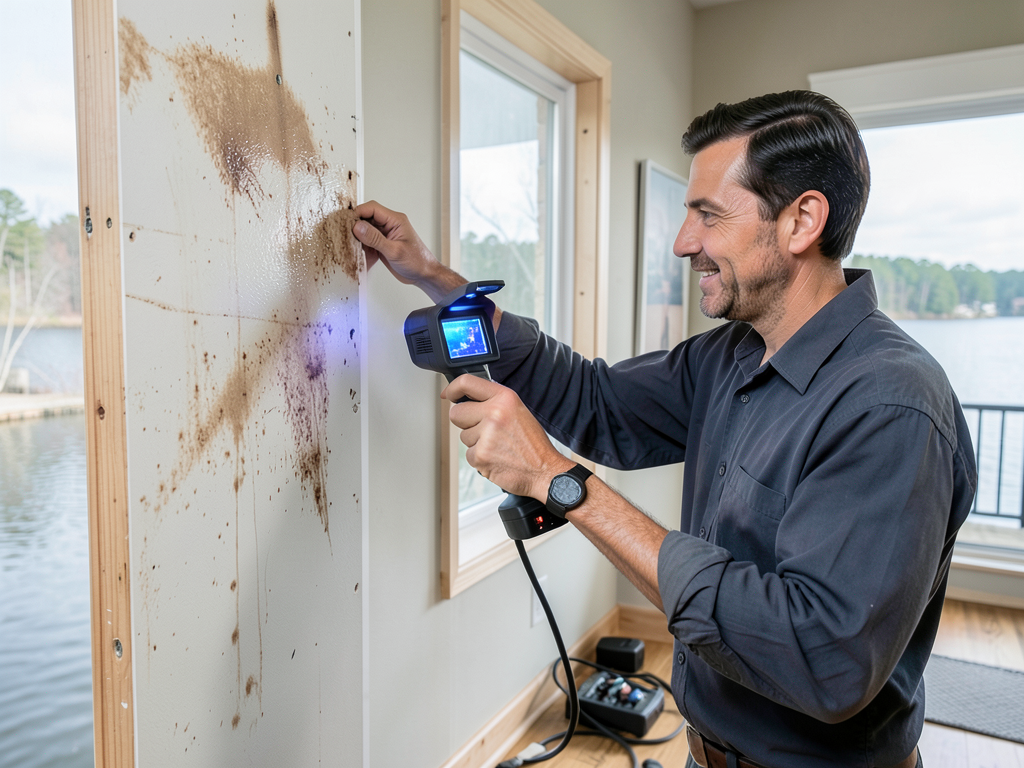
A thorough moisture assessment starts with specialized diagnostic tools. Thermal imaging cameras reveal temperature differences that indicate hidden moisture behind walls. Moisture meters measure water content in wood, drywall, and concrete at specific depths. Hygrometers track relative humidity and dew point throughout your home over 24-48 hours.. Read more about The Real Difference Between Black Mold and Mildew After a Charlotte Flood.
During an assessment, technicians examine your home’s entire moisture pathway. They check roof drainage systems, grade around foundations, crawl space conditions, and HVAC system performance. The goal is identifying not just where moisture exists, but how it’s entering and moving through your home. This comprehensive approach prevents treating symptoms while missing the underlying cause.
Advanced Dehumidification Solutions for Lakefront Homes
Standard portable dehumidifiers simply cannot handle the moisture load in lakefront properties. Professional-grade units remove 70-100 pints of water per day compared to 30-50 pints for consumer models. These systems feature automatic drainage, washable filters, and smart controls that adjust operation based on real-time humidity readings.. Read more about Managing Water Damage Risks for Boathouses and Docks on Mountain Island Lake.
Whole-home dehumidification systems integrate with your existing HVAC to maintain optimal humidity levels throughout the year. These units typically keep indoor relative humidity between 45-55%, the sweet spot that prevents mold growth while remaining comfortable. For severe cases, commercial-grade desiccant dehumidifiers can achieve even lower humidity levels when necessary.
Crawl Space Moisture Control in Cornelius
Crawl spaces are often the hidden source of home moisture problems. In Cornelius, many homes have vented crawl spaces that allow humid outdoor air to enter and condense on cooler surfaces below. This creates ideal conditions for mold growth, wood rot, and pest infestations. The North Carolina Residential Code now requires vapor barriers in crawl spaces, but many older homes lack this protection.
Modern crawl space encapsulation involves sealing the entire area with heavy-duty polyethylene vapor barriers, installing proper drainage systems, and adding dedicated dehumidification. This transforms a moisture source into a dry, usable space that actually helps protect your home’s structure. Some homeowners even convert encapsulated crawl spaces into storage areas or mechanical rooms.
Basement Moisture Solutions for Lakefront Properties
Interior Drainage Systems
Interior French drains collect water that seeps through foundation walls and channel it to a sump pump. These systems are particularly effective for Cornelius properties where high water tables create constant pressure against basement walls. The key is proper installation depth—too shallow and water bypasses the system; too deep and you collect unnecessary groundwater.
Sump Pump Technology
Modern sump pumps feature battery backup systems that keep working during power outages, which often occur during the heavy storms that cause flooding. Some systems include water-powered backups that use municipal water pressure to operate without electricity. For lakefront homes, dual-pump systems provide redundancy—if one pump fails or can’t keep up, the second automatically activates.
Mold Prevention and Remediation
Mold requires three things to grow: moisture, organic material, and temperatures between 40-100°F. Lakefront Cornelius homes often provide all three. Once established, mold colonies can spread rapidly, releasing spores that travel through your entire home via the HVAC system. Professional remediation involves containing the affected area, removing contaminated materials, and treating surfaces with antimicrobial solutions.. Read more about Removing Persistent Musty Odors from Your Home After a Heavy Rain in Grier Heights.
Prevention is far more cost-effective than remediation. Maintaining indoor humidity below 60% prevents most mold species from establishing colonies. Regular HVAC maintenance, including cleaning coils and replacing filters, reduces the organic material that mold feeds on. Some homeowners install UV light systems in their ductwork to kill airborne mold spores.
Building Code Compliance and Moisture Control
Charlotte-Mecklenburg regulations require specific moisture control measures for new construction, but many lakefront properties predate these requirements. The International Residential Code (IRC) Section R408 addresses foundation waterproofing and drainage, while Section R408.9 covers radon control systems that also help manage moisture. Understanding these codes helps identify whether your home meets current moisture control standards.
For major renovations or additions, local building departments often require updated moisture control measures. This might include exterior foundation waterproofing, improved drainage systems, or upgraded vapor barriers. Working with contractors who understand these requirements prevents costly code violations and ensures your moisture control investments meet professional standards. EPA Mold Resources.
Seasonal Moisture Management Strategies
Moisture challenges change with the seasons in Cornelius. Spring brings heavy rains and rapid snowmelt that can overwhelm drainage systems. Summer heat creates high humidity that persists even on dry days. Fall temperature swings cause condensation as warm days give way to cool nights. Winter freeze-thaw cycles can crack foundation walls, creating new entry points for moisture.
Adjusting your moisture control strategy seasonally improves effectiveness. Summer might require maximum dehumidifier capacity and aggressive air conditioning. Fall calls for checking drainage systems before leaves block gutters and downspouts. Winter demands monitoring for ice dams on roofs and ensuring proper attic ventilation. Spring is ideal for inspecting foundation cracks and testing sump pumps before heavy rains arrive.. Read more about A Quick Guide to Monitoring Your Lake Wylie Vacation Home for Pipe Leaks.
Cost Factors and Return on Investment
Moisture control investments vary widely based on your home’s specific needs. Basic dehumidification systems might cost $1,500-3,000, while comprehensive crawl space encapsulation runs $5,000-15,000. Foundation waterproofing and drainage improvements typically range from $3,000-10,000 depending on linear footage and complexity.
The return on investment extends beyond preventing damage. Proper moisture control can reduce energy bills by 15-25% since your HVAC doesn’t fight humidity. It prevents costly repairs to wood framing, drywall, and flooring. Most importantly, it protects your home’s value and your family’s health. Many moisture control improvements also qualify for energy efficiency rebates through utility companies.
DIY vs. Professional Moisture Control
Some moisture issues respond well to DIY approaches. Running portable dehumidifiers in problem areas, improving exterior grading, and cleaning gutters are tasks most homeowners can handle. However, complex issues like foundation cracks, crawl space encapsulation, or whole-home dehumidification require professional expertise and equipment.
The risk of DIY approaches is treating symptoms while missing underlying causes. You might dry out a basement without addressing the hydrostatic pressure causing the problem, leading to recurring issues. Professional assessments identify root causes and provide comprehensive solutions that prevent problems from returning. When in doubt, start with a professional evaluation to understand the scope of your moisture challenges.
Emergency Moisture Response Plan
Even with preventive measures, emergencies happen. A sudden pipe burst, severe storm, or HVAC failure can introduce massive amounts of moisture quickly. Having an emergency response plan prevents panic and minimizes damage. Know where your main water shutoff valve is located. Keep contact information for emergency restoration services readily available. Understand basic water extraction techniques for immediate response. Sump Pump Failure Cleanup and Repair in the Elizabeth Neighborhood.
Most importantly, recognize that time matters. Mold can begin growing within 24-48 hours of water exposure. The longer moisture remains, the more extensive and expensive the damage becomes. Professional emergency services typically arrive within hours, equipped with industrial-grade extraction equipment and commercial dehumidifiers that can remove thousands of gallons of water per day.. Read more about Comparing Air Movers and Industrial Dehumidifiers for Rapid Home Drying in Sedgefield.
Long-Term Moisture Management Success
Effective moisture control isn’t a one-time fix but an ongoing management process. Regular inspections catch developing problems before they become emergencies. Seasonal maintenance ensures systems operate at peak efficiency. Monitoring indoor humidity levels helps you adjust strategies as conditions change.
The most successful lakefront homeowners treat moisture control as home maintenance, similar to roof inspections or HVAC servicing. They understand that living near water requires extra vigilance and investment in protection. With proper systems and regular attention, you can enjoy the beauty of lakefront living without the constant worry about moisture damage.
Frequently Asked Questions
How do I know if my lakefront home has a moisture problem?
Look for musty odors, condensation on windows, peeling paint, warped wood floors, or persistent respiratory issues among family members. A professional moisture assessment using thermal imaging and moisture meters provides definitive answers.
What’s the ideal indoor humidity level for a lakefront home?
Maintain relative humidity between 45-55% year-round. This prevents mold growth while remaining comfortable. Levels above 60% risk mold, while below 30% can cause static electricity and dry skin.
Are moisture control improvements tax deductible?
Generally no, unless the improvements are part of a home office deduction or you have documentation of health-related necessity. However, many improvements qualify for energy efficiency rebates through utility companies.
Take Control of Your Home’s Moisture Today
Don’t let moisture problems damage your lakefront Cornelius property or compromise your family’s health. A professional moisture assessment identifies specific issues affecting your home and provides targeted solutions. With proper moisture control, you can eliminate musty odors, prevent mold growth, protect your home’s structure, and enjoy comfortable indoor air quality year-round.
Call (980) 342-9955 today to schedule your comprehensive moisture assessment. Our experienced technicians understand the unique challenges of lakefront properties and provide solutions that work for Cornelius’s specific climate conditions. Don’t wait until small problems become expensive emergencies—take the first step toward a drier, healthier home now. For more information, visit IICRC Standards.
{
“@context”: “https://schema.org”,
“@type”: “BlogPosting”,
“headline”: “Managing High Humidity and Moisture Levels in Lakefront Cornelius Properties”,
“description”: “Lakefront Cornelius homes face unique moisture challenges. Learn how to control humidity, prevent mold, and protect your property with expert solutions.”,
“wordCount”: 1854,
“datePublished”: “2026-03-10T08:24:00.000Z”,
“dateModified”: “2026-03-10T08:24:00.000Z”,
“inLanguage”: “en-US”,
“mainEntityOfPage”: {
“@type”: “WebPage”,
“@id”: “https://cornerstonewaterdamagerestorationcharlotte.com”
},
“publisher”: {
“@type”: “LocalBusiness”,
“name”: “Cornerstone Water Damage Restoration Charlotte”,
“url”: “https://cornerstonewaterdamagerestorationcharlotte.com”
},
“author”: {
“@type”: “Organization”,
“name”: “Cornerstone Water Damage Restoration Charlotte”,
“url”: “https://cornerstonewaterdamagerestorationcharlotte.com”
},
“image”: {
“@type”: “ImageObject”,
“url”: “https://cornerstonewaterdamagerestorationcharlotte.com/wp-content/uploads/2026/03/managing-high-humidity-and-moisture-levels-in-lake-1.png”
}
}
{
“@context”: “https://schema.org”,
“@type”: “LocalBusiness”,
“name”: “Cornerstone Water Damage Restoration Charlotte”,
“url”: “https://cornerstonewaterdamagerestorationcharlotte.com”,
“address”: {
“@type”: “PostalAddress”,
“addressLocality”: “Charlotte”
},
“areaServed”: {
“@type”: “City”,
“name”: “Charlotte”
}
}
{
“@context”: “https://schema.org”,
“@type”: “FAQPage”,
“mainEntity”: [
{
“@type”: “Question”,
“name”: “How do I know if my lakefront home has a moisture problem?”,
“acceptedAnswer”: {
“@type”: “Answer”,
“text”: “Look for musty odors, condensation on windows, peeling paint, warped wood floors, or persistent respiratory issues among family members. A professional moisture assessment using thermal imaging and moisture meters provides definitive answers.”
}
},
{
“@type”: “Question”,
“name”: “What’s the ideal indoor humidity level for a lakefront home?”,
“acceptedAnswer”: {
“@type”: “Answer”,
“text”: “Maintain relative humidity between 45-55% year-round. This prevents mold growth while remaining comfortable. Levels above 60% risk mold, while below 30% can cause static electricity and dry skin.”
}
},
{
“@type”: “Question”,
“name”: “Are moisture control improvements tax deductible?”,
“acceptedAnswer”: {
“@type”: “Answer”,
“text”: “Generally no, unless the improvements are part of a home office deduction or you have documentation of health-related necessity. However, many improvements qualify for energy efficiency rebates through utility companies.”
}
}
]
}
{
“@context”: “https://schema.org”,
“@type”: “BreadcrumbList”,
“itemListElement”: [
{
“@type”: “ListItem”,
“position”: 1,
“name”: “Home”,
“item”: “https://cornerstonewaterdamagerestorationcharlotte.com”
},
{
“@type”: “ListItem”,
“position”: 2,
“name”: “Blog”,
“item”: “https://cornerstonewaterdamagerestorationcharlotte.com/blog”
},
{
“@type”: “ListItem”,
“position”: 3,
“name”: “Managing High Humidity and Moisture Levels in Lakefront Cornelius Properties”
}
]
}
{
“@context”: “https://schema.org”,
“@type”: “Service”,
“serviceType”: “Water Damage Restoration”,
“provider”: {
“@type”: “LocalBusiness”,
“name”: “Cornerstone Water Damage Restoration Charlotte”,
“url”: “https://cornerstonewaterdamagerestorationcharlotte.com”
},
“areaServed”: {
“@type”: “City”,
“name”: “Charlotte”
},
“description”: “Lakefront Cornelius homes face unique moisture challenges. Learn how to control humidity, prevent mold, and protect your property with expert solutions.”
}