How Industrial Air Scrubbers Protect Your Family During Water Cleanup
Water damage creates more than visible destruction. When walls, floors, and ceilings get wet, they release microscopic particles into the air that can harm your family’s health. Industrial air scrubbers work as silent guardians during the restoration process, capturing mold spores, bacteria, and harmful chemicals before they spread through your home. Specialized Water Damage Restoration for Historic Homes in Dilworth.
Charlotte’s humid climate makes water damage recovery especially challenging. High moisture levels in the air accelerate mold growth within 24-48 hours of a leak. Without proper air filtration, these invisible threats can cause respiratory problems, allergic reactions, and long-term health issues for your family. Rapid Water Extraction and Drying for Properties Near Lake Norman.
Why Air Scrubbers Are Non-Negotiable in Water Damage Recovery
Water-damaged materials release airborne contaminants that standard cleaning cannot address. Wet drywall, insulation, and carpeting become breeding grounds for mold and bacteria. These materials also off-gas volatile organic compounds as they break down.
Industrial air scrubbers create a protective barrier by continuously filtering the air. They remove particles as small as 0.3 microns with 99.97% efficiency. This includes mold spores, which typically range from 2-10 microns, and bacteria that can be even smaller.

A technician positions a Dri-Eaz HEPA 700 air scrubber in a flooded Charlotte basement, creating negative air pressure to contain airborne contaminants.. Read more about How Long Does It Actually Take a Professional Crew to Dry a Flooded House.
The Science of HEPA Filtration and Negative Air Pressure
HEPA stands for High-Efficiency Particulate Air. These filters trap 99.97% of particles that are 0.3 microns in size. To visualize this scale, a human hair is about 70 microns wide. HEPA filters capture particles 230 times smaller than that.
Negative air pressure is the key to containment. When air scrubbers create negative pressure in a work area, contaminated air cannot escape. Instead, it gets pulled through the HEPA filter and clean air returns to the room. This prevents cross-contamination to other parts of your home.
The American Conference of Governmental Industrial Hygienists recommends specific air changes per hour (ACH) for water damage restoration. For mold remediation, they suggest 6-8 ACH to maintain proper air quality. This means the air scrubber completely filters the room’s air volume 6-8 times every hour. American Conference of Governmental Industrial Hygienists.
How Charlotte’s Humidity Impacts Indoor Air Quality After a Leak
Charlotte experiences average relative humidity levels between 65-75% during summer months. This moisture-rich environment creates perfect conditions for mold growth. When water damage occurs, the combination of excess moisture and warm temperatures accelerates microbial growth exponentially.
North Carolina’s building codes recognize these challenges. The North Carolina Residential Code requires specific moisture control measures in crawl spaces and basements. When water intrusion occurs, these protections become overwhelmed.
Charlotte’s clay soil also contributes to water damage problems. The dense red clay absorbs water slowly but retains it for long periods. This creates hydrostatic pressure against foundation walls, leading to basement leaks and crawl space flooding. When these areas get wet, the confined spaces concentrate airborne contaminants. Storm Flooding Emergency Service.
Our Air Scrubbing Process
Professional water damage restoration follows a systematic approach to air quality management. Each step builds on the previous one to ensure complete protection for your family.
- Initial Assessment
Technicians use moisture meters and thermal imaging to identify all affected areas. They test air quality to establish baseline contamination levels.
- Strategic Placement
Air scrubbers get positioned based on the size of the affected area and the severity of contamination. Multiple units may be needed for larger spaces.
- Negative Air Setup
Containment barriers get installed, and air scrubbers create negative pressure zones. This prevents contaminated air from spreading to clean areas.
- Continuous Monitoring
Technicians monitor pressure differentials and air quality throughout the drying process. They adjust equipment placement as materials dry and conditions change.
- Final Testing
After drying is complete, air quality gets tested again to verify that contamination levels have returned to normal. Steps to Take After a Flood.
The Difference Between a DIY Purifier and Industrial Air Scrubbers
Consumer-grade air purifiers cannot match the performance of industrial air scrubbers in water damage scenarios. The differences are substantial and critical for your family’s health.
| Feature | Consumer Air Purifier | Industrial Air Scrubber |
|---|---|---|
| Filtration Efficiency | 95-99% at 2 microns | 99.97% at 0.3 microns |
| Airflow (CFM) | 100-400 cubic feet per minute | 500-2000+ cubic feet per minute |
| Negative Pressure Capability | No | Yes |
| Continuous Operation | Limited (overheats) | 24/7 designed |
| Contamination Level Handling | Light residential | Heavy industrial/water damage |
Industrial units also feature pre-filters that capture larger particles before they reach the expensive HEPA filter. This extends filter life and maintains efficiency during heavy contamination events. Consumer units typically lack this multi-stage filtration.
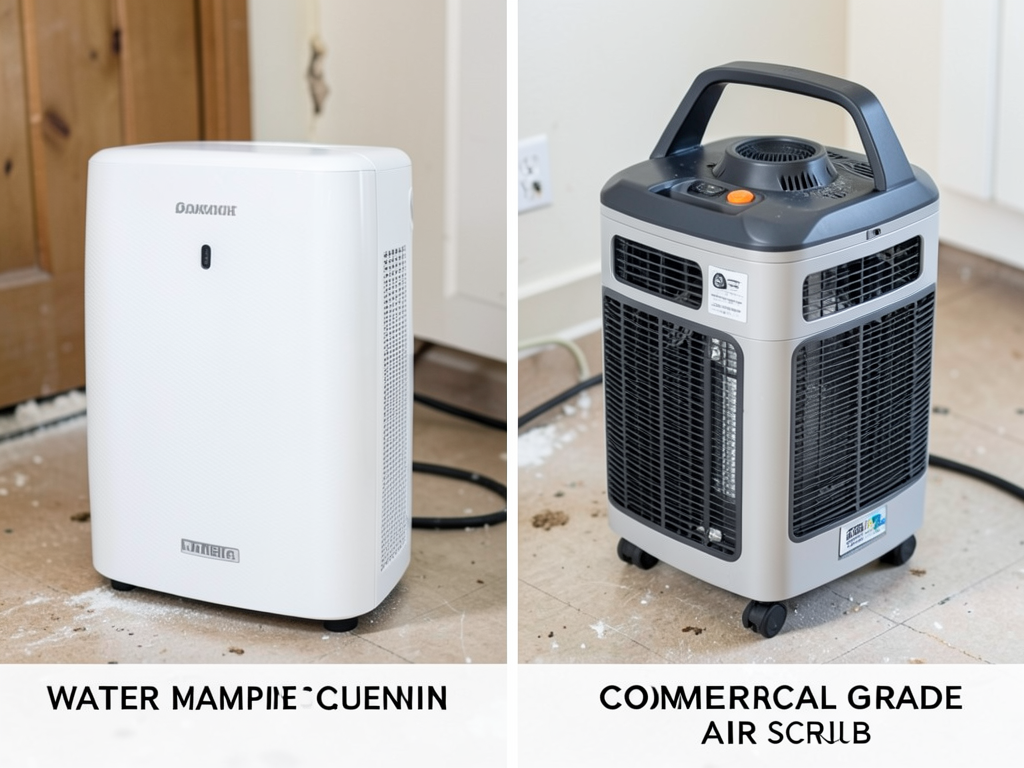
Side-by-side comparison showing a residential air purifier next to a commercial-grade air scrubber during a Charlotte water damage restoration project.
Health Benefits of Professional Air Scrubbing During Water Cleanup
Professional air scrubbing provides immediate and long-term health protection for your family. The benefits extend beyond just removing visible dust and debris.
Mold exposure can cause a range of health problems. Short-term effects include coughing, sneezing, and eye irritation. Long-term exposure may lead to chronic respiratory conditions, especially in children, elderly individuals, and those with compromised immune systems.
Category 3 water damage, which involves sewage or flood water, introduces additional hazards. These waters contain bacteria, viruses, and parasites that can become airborne during cleanup. Industrial air scrubbers with HEPA filtration capture these pathogens before they can infect your family. Sump Pump Failure Cleanup and Repair in the Elizabeth Neighborhood.
Volatile organic compounds from wet building materials create another health risk. These chemicals off-gas as materials break down, creating odors and potential respiratory irritants. Carbon filter stages in industrial air scrubbers absorb these compounds, eliminating both the smell and the health hazard.
Insurance and Documentation for Air Scrubber Usage
Insurance companies recognize air scrubbing as a necessary part of professional water damage restoration. The process is typically covered under mitigation costs when properly documented.
Restoration professionals use specific Xactimate codes for air scrubber rentals and operation. These codes include:
- WTR HEPA AIR SCRUBBER – Daily rental
- WTR HEPA AIR SCRUBBER – Filter replacement
- WTR AIR SCRUBBER – Setup and monitoring
Documentation includes daily logs showing equipment run times, air quality readings, and before/after photos. This evidence supports insurance claims and demonstrates that proper protocols were followed to protect your home and family.
The IICRC S500 Standard for Professional Water Damage Restoration specifically addresses air quality management. Following these guidelines not only ensures proper restoration but also provides the documentation insurance adjusters expect to see. IICRC S500 Standard.
Common Misconceptions About Air Scrubbing
Many homeowners believe that opening windows provides adequate ventilation during water cleanup. However, this approach can actually worsen the problem. Outdoor air may contain pollen, dust, and other allergens that get drawn into the work area.
Another misconception is that air scrubbers are only needed for large commercial projects. Residential water damage can release just as many contaminants, especially in confined spaces like basements and crawl spaces. The smaller the space, the more concentrated the airborne particles become.
Some people think that once visible water is gone, the air is safe. However, moisture trapped in building materials continues to support microbial growth for days or weeks. Professional drying with air scrubbing must continue until all materials reach safe moisture content levels.
When Air Scrubbing Becomes Critical
Certain water damage scenarios make air scrubbing absolutely essential. These high-risk situations require immediate professional intervention with proper air quality management.
Category 3 water damage from sewage backups or flood waters always requires air scrubbing. These waters contain dangerous pathogens that can become aerosolized during cleanup. The health risks are too severe to attempt DIY cleanup without proper containment and filtration.
Visible mold growth indicates that spores are already present in the air. Professional remediation must include air scrubbing to capture these spores before they spread to other areas of your home. Simply cleaning visible mold without addressing airborne contamination guarantees the problem will return.
Large area water damage affecting multiple rooms creates complex contamination patterns. The increased surface area and longer drying times multiply the risk of airborne contamination. Industrial air scrubbers become necessary to maintain safe air quality throughout the restoration process.
A technician monitors air quality readings on a digital meter while industrial air scrubbers operate in the background during a Charlotte water damage restoration project.
Choosing the Right Restoration Company
Not all restoration companies use proper air scrubbing protocols. When selecting a company to handle your water damage, ask specific questions about their air quality management practices.
Verify that they use true HEPA filtration with 99.97% efficiency at 0.3 microns. Some companies use lower-quality filters that cannot capture the smallest and most dangerous particles. Also confirm that they create negative air pressure in contaminated areas.
Ask about their monitoring procedures. Professional companies continuously test air quality throughout the drying process. They should be able to show you documentation of their readings and explain what the numbers mean for your family’s safety.
Check for IICRC certification in water damage restoration. This certification ensures that technicians understand proper air quality management and follow industry standards. Companies without this certification may use outdated or incorrect procedures that put your family at risk.
Protecting Your Family During the Restoration Process
While professional restoration teams work in your home, there are steps you can take to protect your family. Keep children and pets away from work areas, even if barriers are in place. Contaminants can still escape through doorways or when workers move between areas.
If anyone in your family has respiratory conditions, asthma, or allergies, consider temporary relocation during the most intensive phases of restoration. While air scrubbers provide excellent protection, additional precautions help sensitive individuals avoid any potential exposure.
Communicate openly with your restoration team about any health concerns. They can adjust their procedures or timing to accommodate family members with special needs. Professional companies want to ensure your complete safety throughout the restoration process.
The Cost of Not Using Air Scrubbers
Skipping air scrubbing during water damage restoration may seem like a cost-saving measure, but it often leads to much higher expenses later. The immediate savings pale in comparison to the potential costs of inadequate air quality management.
Secondary damage from airborne mold spores can affect areas far from the original water damage. Mold growing in HVAC systems, behind walls, or in attics requires extensive remediation that costs thousands of dollars. These problems often emerge months after the initial water event.
Health issues from poor air quality during restoration can result in medical expenses and lost work time. Respiratory infections, allergic reactions, and other conditions may require doctor visits, medications, and time away from work or school.
Insurance companies may deny claims for secondary damage if proper air quality protocols were not followed during the initial restoration. This leaves homeowners responsible for all remediation costs, which can easily exceed the original restoration budget.
Conclusion
Industrial air scrubbers are not optional equipment during water damage restoration. They are essential tools that protect your family’s health by removing harmful particles, mold spores, and chemicals from the air. In Charlotte’s humid climate, where mold grows rapidly after water damage, proper air filtration becomes even more critical.
Professional restoration companies use industrial-grade air scrubbers with HEPA filtration to create negative air pressure and continuously clean the air during the entire drying process. This protects your family from immediate health hazards and prevents long-term problems that can emerge from inadequate air quality management.
When water damage strikes your Charlotte home, don’t compromise on air quality protection. The small additional cost of professional air scrubbing provides invaluable peace of mind and safeguards your family’s health during a stressful time.
Call (980) 342-9955 today to schedule your inspection and ensure your family stays protected during water damage restoration.
Frequently Asked Questions
How long do air scrubbers need to run during water damage restoration?
Air scrubbers typically run continuously for 3-5 days during water damage restoration, depending on the extent of damage and drying conditions. The equipment stays operational until moisture meters confirm all materials have reached safe drying levels and air quality tests show normal contamination levels.
Are air scrubbers loud and disruptive to daily life?
Industrial air scrubbers produce noise similar to a large fan or air conditioner, typically 50-70 decibels. While noticeable, they are designed for continuous operation and most families adapt quickly. The temporary noise is far less disruptive than the health risks of not using them.
Can I just open windows instead of using air scrubbers?
Opening windows provides minimal protection and can actually worsen contamination. Outdoor air may contain allergens, and without negative pressure, contaminated air escapes into clean areas of your home. Professional air scrubbers create controlled airflow that captures and contains harmful particles effectively.
{
“@context”: “https://schema.org”,
“@type”: “BlogPosting”,
“headline”: “How Industrial Air Scrubbers Protect Your Family During Water Cleanup”,
“description”: “Learn how industrial air scrubbers remove mold spores, bacteria, and harmful chemicals during water damage restoration to protect your family’s health.”,
“wordCount”: 2129,
“datePublished”: “2026-03-23T15:55:00.000Z”,
“dateModified”: “2026-03-23T15:55:00.000Z”,
“inLanguage”: “en-US”,
“mainEntityOfPage”: {
“@type”: “WebPage”,
“@id”: “https://cornerstonewaterdamagerestorationcharlotte.com”
},
“publisher”: {
“@type”: “LocalBusiness”,
“name”: “Cornerstone Water Damage Restoration Charlotte”,
“url”: “https://cornerstonewaterdamagerestorationcharlotte.com”
},
“author”: {
“@type”: “Organization”,
“name”: “Cornerstone Water Damage Restoration Charlotte”,
“url”: “https://cornerstonewaterdamagerestorationcharlotte.com”
},
“image”: {
“@type”: “ImageObject”,
“url”: “https://cornerstonewaterdamagerestorationcharlotte.com/wp-content/uploads/2026/03/how-industrial-air-scrubbers-protect-your-family-d-1.png”
}
}
{
“@context”: “https://schema.org”,
“@type”: “LocalBusiness”,
“name”: “Cornerstone Water Damage Restoration Charlotte”,
“url”: “https://cornerstonewaterdamagerestorationcharlotte.com”,
“address”: {
“@type”: “PostalAddress”,
“addressLocality”: “Charlotte”
},
“areaServed”: {
“@type”: “City”,
“name”: “Charlotte”
}
}
{
“@context”: “https://schema.org”,
“@type”: “FAQPage”,
“mainEntity”: [
{
“@type”: “Question”,
“name”: “How long do air scrubbers need to run during water damage restoration?”,
“acceptedAnswer”: {
“@type”: “Answer”,
“text”: “Air scrubbers typically run continuously for 3-5 days during water damage restoration, depending on the extent of damage and drying conditions. The equipment stays operational until moisture meters confirm all materials have reached safe drying levels and air quality tests show normal contamination levels.”
}
},
{
“@type”: “Question”,
“name”: “Are air scrubbers loud and disruptive to daily life?”,
“acceptedAnswer”: {
“@type”: “Answer”,
“text”: “Industrial air scrubbers produce noise similar to a large fan or air conditioner, typically 50-70 decibels. While noticeable, they are designed for continuous operation and most families adapt quickly. The temporary noise is far less disruptive than the health risks of not using them.”
}
},
{
“@type”: “Question”,
“name”: “Can I just open windows instead of using air scrubbers?”,
“acceptedAnswer”: {
“@type”: “Answer”,
“text”: “Opening windows provides minimal protection and can actually worsen contamination. Outdoor air may contain allergens, and without negative pressure, contaminated air escapes into clean areas of your home. Professional air scrubbers create controlled airflow that captures and contains harmful particles effectively.”
}
}
]
}
{
“@context”: “https://schema.org”,
“@type”: “HowTo”,
“name”: “Professional Air Scrubbing Process”,
“step”: [
{
“@type”: “HowToStep”,
“position”: 1,
“name”: “Initial Assessment”,
“text”: “Technicians use moisture meters and thermal imaging to identify all affected areas. They test air quality to establish baseline contamination levels.”
},
{
“@type”: “HowToStep”,
“position”: 2,
“name”: “Strategic Placement”,
“text”: “Air scrubbers get positioned based on the size of the affected area and the severity of contamination. Multiple units may be needed for larger spaces.”
},
{
“@type”: “HowToStep”,
“position”: 3,
“name”: “Negative Air Setup”,
“text”: “Containment barriers get installed, and air scrubbers create negative pressure zones. This prevents contaminated air from spreading to clean areas.”
},
{
“@type”: “HowToStep”,
“position”: 4,
“name”: “Continuous Monitoring”,
“text”: “Technicians monitor pressure differentials and air quality throughout the drying process. They adjust equipment placement as materials dry and conditions change.”
},
{
“@type”: “HowToStep”,
“position”: 5,
“name”: “Final Testing”,
“text”: “After drying is complete, air quality gets tested again to verify that contamination levels have returned to normal. Steps to Take After a Flood.”
}
],
“image”: “https://cornerstonewaterdamagerestorationcharlotte.com/wp-content/uploads/2026/03/how-industrial-air-scrubbers-protect-your-family-d-1.png”
}
{
“@context”: “https://schema.org”,
“@type”: “BreadcrumbList”,
“itemListElement”: [
{
“@type”: “ListItem”,
“position”: 1,
“name”: “Home”,
“item”: “https://cornerstonewaterdamagerestorationcharlotte.com”
},
{
“@type”: “ListItem”,
“position”: 2,
“name”: “Blog”,
“item”: “https://cornerstonewaterdamagerestorationcharlotte.com/blog”
},
{
“@type”: “ListItem”,
“position”: 3,
“name”: “How Industrial Air Scrubbers Protect Your Family During Water Cleanup”
}
]
}
{
“@context”: “https://schema.org”,
“@type”: “Service”,
“serviceType”: “Water Damage Restoration”,
“provider”: {
“@type”: “LocalBusiness”,
“name”: “Cornerstone Water Damage Restoration Charlotte”,
“url”: “https://cornerstonewaterdamagerestorationcharlotte.com”
},
“areaServed”: {
“@type”: “City”,
“name”: “Charlotte”
},
“description”: “Learn how industrial air scrubbers remove mold spores, bacteria, and harmful chemicals during water damage restoration to protect your family’s health.”
}