How to Save Your Hardwood Floors After Water Damage in Your Charlotte Home
Water on hardwood floors triggers immediate panic for Charlotte homeowners. The humid climate and sudden storms make this a common emergency. Quick action can save thousands in replacement costs. This guide shows you exactly what to do when water threatens your floors. Specialized Water Damage Restoration for Historic Homes in Dilworth.
Why Charlotte Homes Are Vulnerable to Hardwood Floor Water Damage
Charlotte’s combination of clay soil, high humidity, and aging plumbing creates perfect conditions for hardwood floor disasters. Homes in neighborhoods like Myers Park and Dilworth often have original hardwood floors that are particularly susceptible to moisture damage. When a pipe bursts or a washing machine hose fails, water seeps between floorboards and into the subfloor before you even notice. Rapid Water Extraction and Drying for Properties Near Lake Norman.
The Red Clay soil common in Mecklenburg County doesn’t drain well. Water from heavy rains or foundation leaks pools around your home’s perimeter. This hydrostatic pressure forces moisture through concrete slabs or into crawl spaces, eventually reaching your beautiful hardwood floors above.. Read more about Comparing Local Water Restoration Companies in Fort Mill and Tega Cay.
Emergency Steps to Take When Water Hits Your Hardwood
Time is your enemy. Every hour water sits increases damage exponentially. Here’s what to do immediately: What to Do Immediately if Your Ballantyne Basement Floods Tonight.
- Stop the Water Source
Shut off the main water valve if it’s a plumbing leak. For storm water, use towels to block entry points.. Read more about How We Handle Water Damage Insurance Claims for Charlotte Homeowners.
- Remove Standing Water
Use a wet vacuum or mop to extract visible water. Don’t use a regular vacuum – it can cause electrical hazards.. Read more about Finding a Reliable Water Damage Specialist in Myers Park Without the Stress.
- Increase Air Circulation
Open windows, turn on fans, and run your HVAC system to start the drying process.
- Document Everything
Take photos and videos for insurance purposes before moving furniture or starting cleanup. Sump Pump Failure Cleanup and Repair in the Elizabeth Neighborhood.
These steps buy you time but don’t replace professional equipment. The moisture you can’t see is what causes the most damage. Steps to Take After a Flood.
Understanding Hardwood Floor Water Damage Types
Not all water damage looks the same. Knowing what you’re dealing with helps determine if your floors can be saved.
| Damage Type | Appearance | Salvageable? | Typical Cause |
|---|---|---|---|
| Cupping | Edges of boards rise higher than center | Often yes, if caught early | Moisture imbalance from below |
| Crowning | Center of boards rise higher than edges | Sometimes, requires sanding | Moisture from above or humidity |
| Buckling | Entire boards pull away from subfloor | Rarely, usually requires replacement | Severe prolonged moisture exposure |
| Dark Staining | Black or gray discoloration | No, indicates mold growth | Water sitting for 24+ hours |
Cupping is the most common issue in Charlotte homes. The humid summer air and poor drainage create conditions where moisture wicks up through the subfloor, causing the bottom of boards to expand more than the top.
The Cornerstone 5-Step Hardwood Floor Restoration Process
Our certified technicians use industrial-grade equipment that homeowners can’t rent. Here’s what happens when you call (980) 342-9955:
- Moisture Assessment
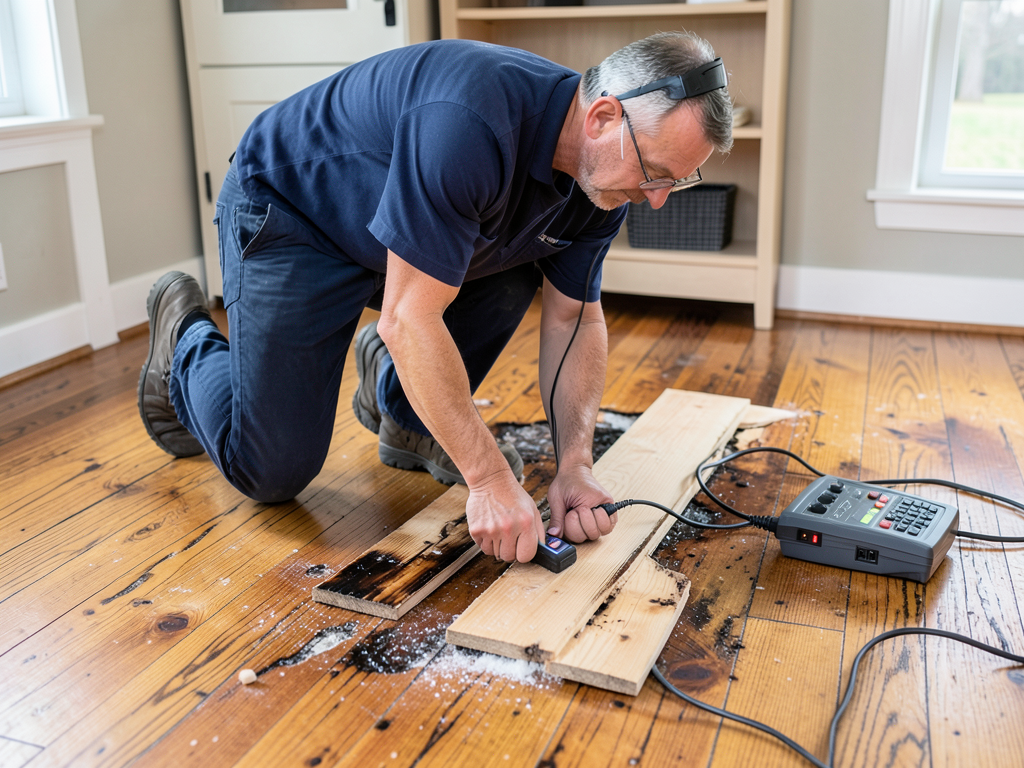
We use pin-type moisture meters to test multiple depths – surface, core, and subfloor. Readings above 12% indicate active moisture problems.
- Water Extraction
High-powered truck-mounted extractors remove water from between boards and from the subfloor below. This equipment pulls moisture from areas you can’t see.
- Controlled Drying
We set up dehumidifiers and air movers in a specific pattern. Too much air movement warps boards; too little leaves moisture trapped.
- Monitoring
Daily moisture readings track progress. We adjust equipment based on psychrometric readings – measuring temperature, humidity, and dew point.
- Final Assessment
Only when moisture content reaches 6-9% do we consider floors stable. We then recommend refinishing or replacement options.
This process follows IICRC S500 standards for water damage restoration. The standard requires specific moisture content targets and documented drying progress. IICRC S500 Standards.
Common Causes of Hardwood Floor Water Damage in Charlotte
Understanding the source helps prevent future damage. Here are the most frequent culprits we see:
- Appliance Failures – Washing machine hoses burst, dishwasher leaks, refrigerator water lines fail
- Plumbing Issues – Burst pipes during rare freezes, corroded copper lines, failed fittings
- Foundation Problems – Poor drainage causes water to seep through slab cracks
- Roof Leaks – Damaged flashing or missing shingles allow water into wall cavities
- AC Condensate Lines – Clogged drain lines cause overflow onto floors below
Homes built before 2000 in Charlotte often have polybutylene plumbing. This material fails catastrophically and is a common cause of hardwood floor water damage in neighborhoods like SouthPark and Foxcroft.. Read more about What to Expect During Your South End Condo Water Damage Restoration.
Insurance Coverage for Hardwood Floor Water Damage
Most homeowners policies cover sudden, accidental water damage. But coverage varies significantly. Here’s what typically applies:
| Water Source | Coverage Likelihood | Typical Limitations |
|---|---|---|
| Burst Pipe | High | May exclude pipe repair costs |
| Appliance Leak | High | Depreciation may apply |
| Foundation Seepage | Low | Considered maintenance issue |
| Storm Surge | Very Low | Requires separate flood insurance |
We work directly with insurance companies to document damage and provide the technical reports they need. Our experience with State Farm, Allstate, and Nationwide claims in Charlotte means we know exactly what documentation gets claims approved.
Preventing Future Hardwood Floor Water Damage
Once your floors are restored, prevention becomes critical. Here are proven strategies:
- Install Water Sensors – Place them near appliances, under sinks, and by water heaters
- Upgrade Plumbing – Replace polybutylene pipes and old supply lines with modern materials
- Improve Drainage – Grade soil away from foundation, clean gutters, extend downspouts
- Maintain HVAC – Service AC annually, clean condensate lines, check for condensation
- Seal Vulnerable Areas – Caulk around windows, repair roof flashing, seal foundation cracks
Charlotte’s building code requires specific vapor barrier installation in crawl spaces. Homes without proper vapor barriers in Mecklenburg County are 3x more likely to experience hardwood floor moisture issues.
When to Call the Professionals
DIY drying works for small spills, but these situations demand professional help:
- Water covers more than 10 square feet
- Water has been sitting for more than 24 hours
- You see mold or smell musty odors
- Multiple rooms are affected
- Water came from contaminated sources
Professional restoration isn’t just about drying floors. It’s about preventing mold growth, protecting your home’s structural integrity, and ensuring proper moisture levels for long-term stability.
Frequently Asked Questions
How long does it take to dry hardwood floors after water damage?
Professional drying typically takes 3-7 days depending on the extent of damage, wood type, and environmental conditions. We monitor moisture content daily until it reaches safe levels between 6-9%.
Can cupped hardwood floors be saved?
Yes, if caught early. Cupping indicates moisture imbalance but doesn’t always mean permanent damage. Professional drying and sometimes light sanding can restore the floor’s appearance.
Will my insurance cover water-damaged hardwood floors?
Most policies cover sudden, accidental water damage from sources like burst pipes or appliance failures. Coverage for gradual damage or foundation seepage is typically excluded. EPA mold information.
How can I tell if water has damaged my hardwood subfloor?
Signs include soft spots when walking, visible warping from below in crawl spaces, or moisture meter readings above 12% in the subfloor material.
Don’t Wait – Call Now for Emergency Service
Every hour counts when water threatens your hardwood floors. The longer moisture sits, the more damage occurs and the less likely your floors can be saved. Our certified technicians are standing by 24/7 to respond to Charlotte water damage emergencies.
Call (980) 342-9955 now for immediate assistance. We’ll arrive within 60 minutes to begin the restoration process and give your hardwood floors the best chance of survival.
Don’t risk permanent damage to your home’s most valuable flooring. Pick up the phone and call (980) 342-9955 before the next storm hits or the next pipe bursts.
Why Choose Cornerstone for Your Hardwood Floor Restoration
We’re not just another restoration company. We’re Charlotte locals who understand the unique challenges our climate and soil conditions create for hardwood floors. Our technicians hold IICRC certifications and use industrial-grade equipment that achieves results impossible with rental units.
We’ve saved thousands of feet of hardwood flooring in neighborhoods across Charlotte – from historic Dilworth bungalows to modern Ballantyne estates. Our 24/7 emergency response means we’re there when you need us most, not when it’s convenient for our schedule.
Your hardwood floors represent a significant investment in your home’s beauty and value. Don’t trust their restoration to anyone else. Call (980) 342-9955 today to schedule your inspection and take the first step toward saving your floors.
{
“@context”: “https://schema.org”,
“@type”: “BlogPosting”,
“headline”: “How to Save Your Hardwood Floors After Water Damage in Your Charlotte Home”,
“description”: “Don’t let water destroy your hardwood floors. Learn expert techniques to save your Charlotte home’s flooring after water damage with Cornerstone’s proven process.”,
“wordCount”: 1402,
“datePublished”: “2026-02-25T14:24:00.000Z”,
“dateModified”: “2026-02-25T14:24:00.000Z”,
“inLanguage”: “en-US”,
“mainEntityOfPage”: {
“@type”: “WebPage”,
“@id”: “https://cornerstonewaterdamagerestorationcharlotte.com”
},
“publisher”: {
“@type”: “LocalBusiness”,
“name”: “Cornerstone Water Damage Restoration Charlotte”,
“url”: “https://cornerstonewaterdamagerestorationcharlotte.com”
},
“author”: {
“@type”: “Organization”,
“name”: “Cornerstone Water Damage Restoration Charlotte”,
“url”: “https://cornerstonewaterdamagerestorationcharlotte.com”
},
“image”: {
“@type”: “ImageObject”,
“url”: “https://cornerstonewaterdamagerestorationcharlotte.com/wp-content/uploads/2026/03/how-to-save-your-hardwood-floors-after-water-damag-1.png”
}
}
{
“@context”: “https://schema.org”,
“@type”: “LocalBusiness”,
“name”: “Cornerstone Water Damage Restoration Charlotte”,
“url”: “https://cornerstonewaterdamagerestorationcharlotte.com”,
“address”: {
“@type”: “PostalAddress”,
“addressLocality”: “Charlotte”
},
“areaServed”: {
“@type”: “City”,
“name”: “Charlotte”
}
}
{
“@context”: “https://schema.org”,
“@type”: “FAQPage”,
“mainEntity”: [
{
“@type”: “Question”,
“name”: “How long does it take to dry hardwood floors after water damage?”,
“acceptedAnswer”: {
“@type”: “Answer”,
“text”: “Professional drying typically takes 3-7 days depending on the extent of damage, wood type, and environmental conditions. We monitor moisture content daily until it reaches safe levels between 6-9%.”
}
},
{
“@type”: “Question”,
“name”: “Can cupped hardwood floors be saved?”,
“acceptedAnswer”: {
“@type”: “Answer”,
“text”: “Yes, if caught early. Cupping indicates moisture imbalance but doesn’t always mean permanent damage. Professional drying and sometimes light sanding can restore the floor’s appearance.”
}
},
{
“@type”: “Question”,
“name”: “Will my insurance cover water-damaged hardwood floors?”,
“acceptedAnswer”: {
“@type”: “Answer”,
“text”: “Most policies cover sudden, accidental water damage from sources like burst pipes or appliance failures. Coverage for gradual damage or foundation seepage is typically excluded. EPA mold information.”
}
},
{
“@type”: “Question”,
“name”: “How can I tell if water has damaged my hardwood subfloor?”,
“acceptedAnswer”: {
“@type”: “Answer”,
“text”: “Signs include soft spots when walking, visible warping from below in crawl spaces, or moisture meter readings above 12% in the subfloor material.”
}
}
]
}
{
“@context”: “https://schema.org”,
“@type”: “HowTo”,
“name”: “Emergency Hardwood Floor Water Response”,
“step”: [
{
“@type”: “HowToStep”,
“position”: 1,
“name”: “Stop the Water Source”,
“text”: “Shut off the main water valve if it’s a plumbing leak. For storm water, use towels to block entry points.”
},
{
“@type”: “HowToStep”,
“position”: 2,
“name”: “Remove Standing Water”,
“text”: “Use a wet vacuum or mop to extract visible water. Don’t use a regular vacuum – it can cause electrical hazards.”
},
{
“@type”: “HowToStep”,
“position”: 3,
“name”: “Increase Air Circulation”,
“text”: “Open windows, turn on fans, and run your HVAC system to start the drying process.”
},
{
“@type”: “HowToStep”,
“position”: 4,
“name”: “Document Everything”,
“text”: “Take photos and videos for insurance purposes before moving furniture or starting cleanup. Sump Pump Failure Cleanup and Repair in the Elizabeth Neighborhood.”
}
],
“image”: “https://cornerstonewaterdamagerestorationcharlotte.com/wp-content/uploads/2026/03/how-to-save-your-hardwood-floors-after-water-damag-1.png”
}
{
“@context”: “https://schema.org”,
“@type”: “BreadcrumbList”,
“itemListElement”: [
{
“@type”: “ListItem”,
“position”: 1,
“name”: “Home”,
“item”: “https://cornerstonewaterdamagerestorationcharlotte.com”
},
{
“@type”: “ListItem”,
“position”: 2,
“name”: “Blog”,
“item”: “https://cornerstonewaterdamagerestorationcharlotte.com/blog”
},
{
“@type”: “ListItem”,
“position”: 3,
“name”: “How to Save Your Hardwood Floors After Water Damage in Your Charlotte Home”
}
]
}
{
“@context”: “https://schema.org”,
“@type”: “Service”,
“serviceType”: “Water Damage Restoration”,
“provider”: {
“@type”: “LocalBusiness”,
“name”: “Cornerstone Water Damage Restoration Charlotte”,
“url”: “https://cornerstonewaterdamagerestorationcharlotte.com”
},
“areaServed”: {
“@type”: “City”,
“name”: “Charlotte”
},
“description”: “Don’t let water destroy your hardwood floors. Learn expert techniques to save your Charlotte home’s flooring after water damage with Cornerstone’s proven process.”
}