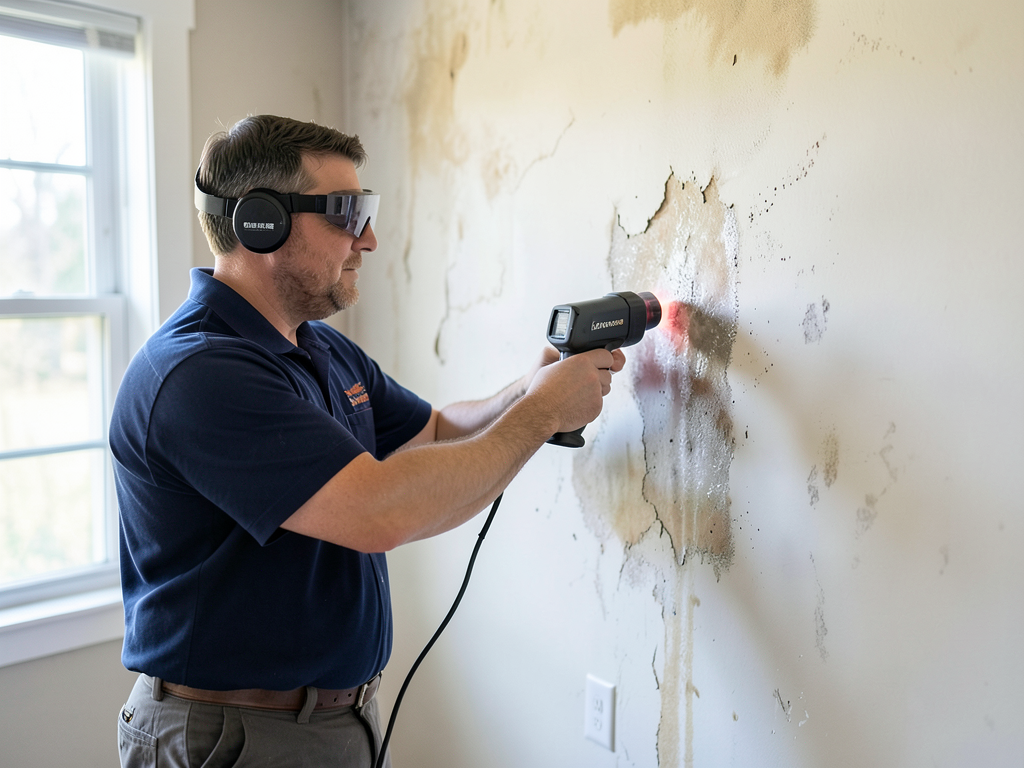







Charlotte sits on red clay soil that behaves like a sponge. During summer thunderstorms, the clay absorbs water and expands, pushing hydrostatic pressure against basement walls and slab foundations. When the soil dries out in fall, it contracts and pulls away, creating voids. That cycle repeats every year, opening hairline cracks in foundations that allow groundwater to seep into crawl spaces and interior wall cavities. Homes built before 1980 often lack proper vapor barriers or perimeter drainage, making moisture intrusion through the sill plate a chronic issue. When that moisture reaches interior walls, baseboards are the first material to show damage. The combination of high summer humidity and poor foundation drainage makes bloated wood trim one of the most common restoration calls we receive in Mecklenburg County.
Charlotte building codes require moisture barriers in new construction, but older homes in neighborhoods like Plaza Midwood, NoDa, and Chantilly were built before modern moisture management standards existed. Cornerstone Water Damage Restoration Charlotte has restored baseboards in historic homes where the original builder never installed a vapor barrier over the crawl space dirt. We have worked in mid-century ranches where the original galvanized plumbing corroded and leaked for months before the homeowner noticed swelling trim. Our familiarity with Charlotte's building history means we know where to look for moisture sources before we even open the wall. Local expertise matters when diagnosing water intrusion because the construction methods, soil conditions, and climate patterns are specific to this region.